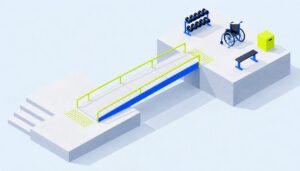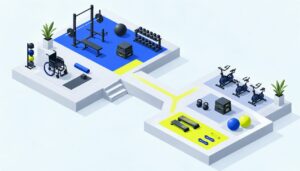
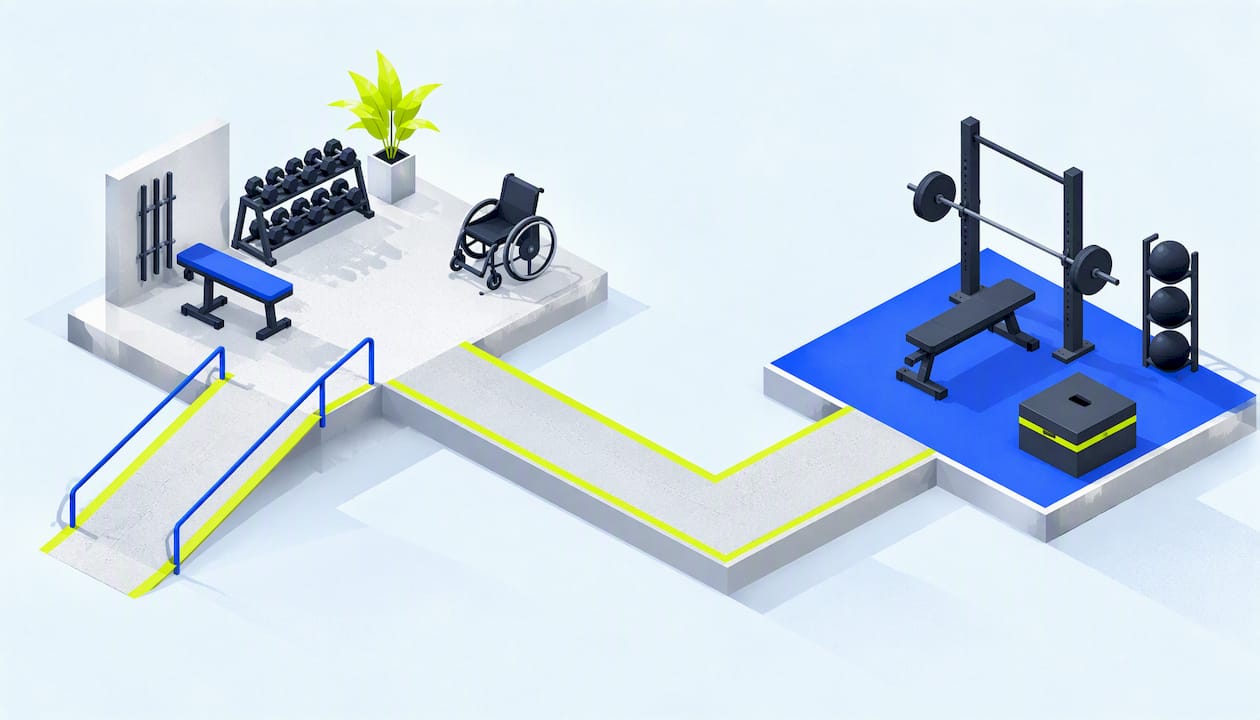
Disability inclusion in fitness means building your gym, programs and staff habits so that people with different bodies, senses and ways of communicating can use them from day one, without having to ask for a special favor. In Australia it is also a legal matter, not just good practice. This guide covers the basics: what inclusion means, what the law says, the physical and program changes that matter most, and how to talk to members respectfully.
TL;DR
- Inclusion means designing for a range of access needs from the start, then adapting to the individual. It is not a separate “disability program” bolted onto the timetable.
- The Disability Discrimination Act 1992 makes it unlawful to discriminate in access to premises, facilities and sporting activities, so inclusion is a compliance issue as well as a growth one.
- The biggest wins are cheap: clear floors, spaced equipment, contrast and padding, quieter sessions, an accessible gym map and a proper induction.
- Ask, don’t assume. Speak directly to the member, protect their privacy and allow extra time.
- Staff habits matter as much as equipment. Structured training gives your whole team the same baseline.
Table of Contents
- What disability inclusion in fitness actually means
- Why it matters for your gym or practice
- What Australian law expects of gyms
- Common barriers, and how to remove them
- Adapting equipment, workouts and classes
- Communicating respectfully with members
- Training staff so inclusion sticks
- A starter checklist
- Where Inclusive-AF fits
- FAQ
- Sources
What disability inclusion in fitness actually means
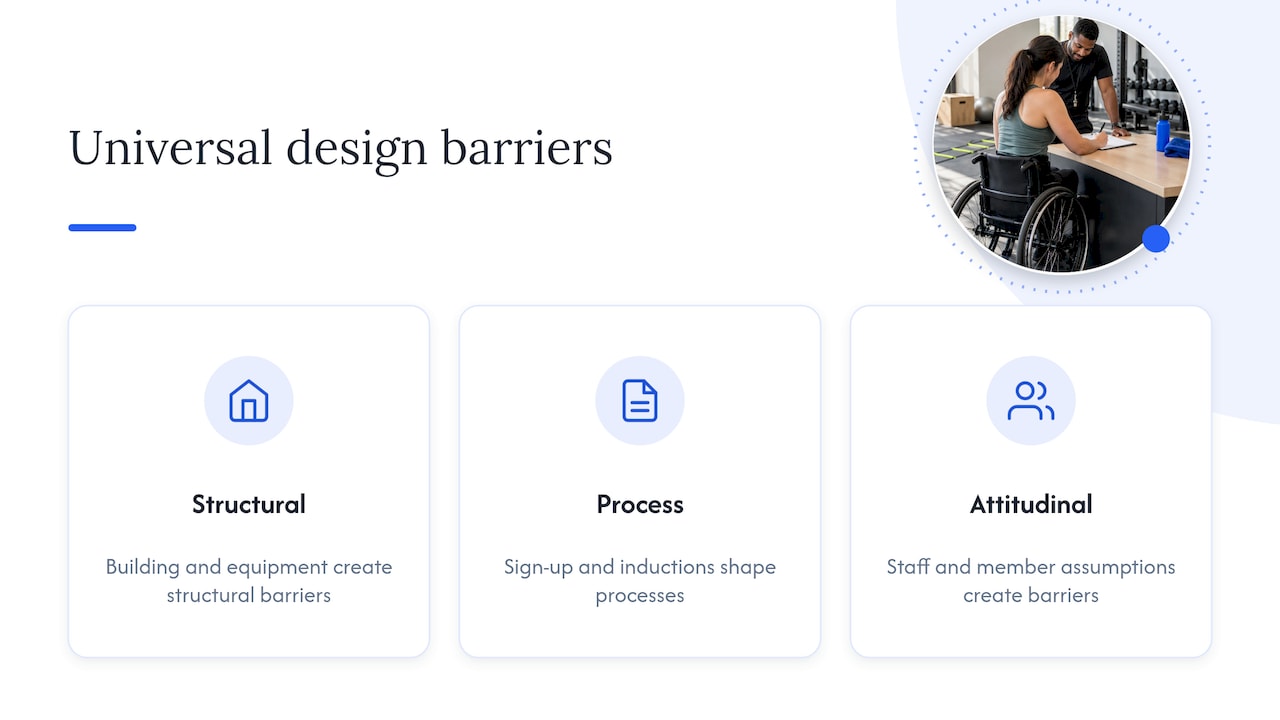
The simplest definition comes from universal design: products, programs, buildings and services should work well for everyone from the start. Paralympics Australia’s Universal Design Guide frames it around three kinds of barrier: structural (the building and equipment), process (how things get done, such as sign-up and inductions) and attitudinal (what staff and other members assume). It also treats universal design as relevant to sports facilities, documentation, training and learning and development, which covers almost everything a gym does.
That three-part lens is useful because most gyms only think about the first one. A ramp at the front door matters, but it does not help if the induction is rushed, the membership terms do not allow a support worker to come in, or a trainer addresses the support person instead of the member.
Inclusion is also broader than wheelchair access. Disability includes mobility, vision, hearing, intellectual, psychosocial, neurological and sensory differences, and many are invisible. A gym that only plans for one picture of disability will miss most of the people it could serve.
Why it matters for your gym or practice
Three reasons come up again and again.
Members. People with disability are already looking for places to train. They are quick to notice which gyms have thought about them and which have not, and they talk to each other. A gym that gets the basics right earns loyalty and referrals.
Risk. A gym that has not thought about accessibility is more likely to have trip hazards, confusing layouts and staff who say the wrong thing. Fixing these protects every member, not only disabled ones.
Obligations. Australian law applies to gyms of every size. The next section covers it.
What Australian law expects of gyms
This is general information, not legal advice. If you are unsure whether a specific change is required, speak to a lawyer or the Australian Human Rights Commission.
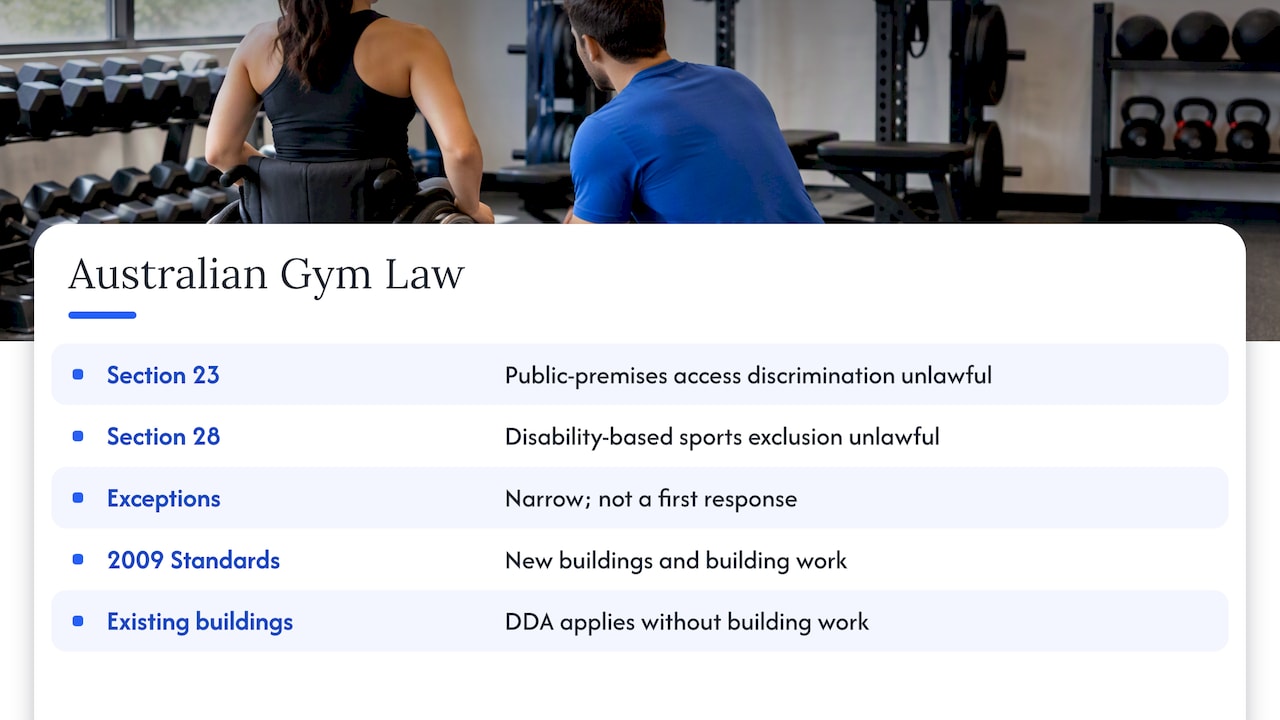
The Disability Discrimination Act 1992 (DDA) is the key law. Section 23 makes it unlawful to discriminate against a person because of disability in access to premises the public may enter or use, in the terms or means of access, in the use of facilities, or by requiring the person to leave. Section 28 makes it unlawful to exclude a person from a sporting activity because of disability. There are exceptions, including where a person cannot perform the actions reasonably required, where selection is reasonably based on skill, or where an activity is designed specifically for people with a particular disability. Those exceptions are narrow, and a trainer should not reach for them as a first response to an enquiry.
Building rules add another layer. Australian Government guidance on the Disability (Access to Premises, Buildings) Standards 2009 explains that the Standards set national requirements for new buildings and new building work in existing buildings. The general DDA provisions continue to apply to existing buildings not undergoing building work, and to matters such as furniture, fit-out and discriminatory management behavior. In practice, an older gym cannot say “the building is old, so we are exempt”. How you lay out the floor and how your staff behave are both covered.
Common barriers, and how to remove them
Vision Australia’s guide to creating a more inclusive gym names barriers that show up in almost every gym: obstacles left on the floor, hazardous overhanging equipment, and difficulty finding equipment or finding your way around. Although written with blind and low-vision members in mind, most of its fixes help everyone.
Floors, layout and orientation
- Keep walkways and floors clear. Weights, mats and bags left in aisles are a hazard for anyone who cannot scan the floor quickly, and a barrier for wheelchair and walker users.
- Space equipment so there is room to turn, transfer and pass.
- Use contrasting colors and floor markers to help people find zones and edges.
- Pad overhanging equipment at head height.
- Identify quieter periods and tell members when they are.
The March 2026 gym tip sheet from an Australian disability service backs the same points: clear walkways, equipment spacing and published information about accessible features.
Information before people arrive
Many members decide whether to join based on what they can learn online. City of Sydney Leisure’s accessibility page is a good model. It lists features that may vary by centre, such as mobility parking, lifts, ramps, accessible change rooms, aqua wheelchairs and pool hoists, and it uses centre-specific Access Keys with photographs, supportive text and alternate formats.
You do not need a council budget to copy the idea. A single page that lists your entrances, parking, lift, change rooms, quiet times and contact person will answer most of the questions that otherwise stop people from walking in.
Vision Australia also recommends an accessible online gym map showing things like water stations, free weights, treadmills and stairs, supplied during induction. Keep it simple, text-based and screen-reader friendly.
Change rooms and bathrooms
Change rooms are where many gyms fall down, and where members feel it most. Our guide to accessible changing rooms covers what to get right.
Adapting equipment, workouts and classes
Inclusion is not about having a specialist machine for every need. The tip sheet recommends offering adaptable options: lighter weights, straps, benches and modified exercises. A trainer who can modify a movement in three ways is worth more than a room of expensive equipment nobody knows how to set up.
Practical adaptations to build into your standard offering:
- Offer a regression and a progression for every exercise in a class, and present them as normal options, not as the “easy version”.
- Use visual and written supports. QR codes linking to short videos, easy-read signage and communication boards help members with intellectual disability, people who prefer visual instructions, and anyone new to the gym.
- Run sensory-friendly sessions with lower lighting, quieter music and fewer people. These suit many autistic members and people with sensory sensitivities. See our guides to sensory-friendly gym design and autism-friendly gyms in Australia.
- Check hearing access. The 2025 Australian Sports and Physical Activity for People with Disability indoor venue recommendations identify hearing loops, captioning, communication tools, acoustic control, lighting and color as relevant to deaf and hard-of-hearing access. Loud, echoing studios are hard for hearing aid and cochlear implant users.
- Plan for specific conditions with the right knowledge. Our practical guides on cerebral palsy exercise and training clients with spinal cord injury show how programming changes in detail. For a wider view, read how to design adaptive fitness programs.
Communicating respectfully with members
Most inclusion failures are conversational, not structural. The tip sheet and Vision Australia’s guide agree on the core habits:
- Speak directly to the member, not to a support worker or family member who is with them.
- Ask, and listen, without assumptions. “How would you like to do this?” beats guessing.
- Protect privacy. Do not discuss someone’s diagnosis or needs in front of other members.
- Allow extra time. Do not rush the induction or fill silences.
- Offer, don’t impose. For a blind or low-vision member, Vision Australia suggests offering an elbow rather than assuming physical assistance, giving precise directions in the layout tour and giving detailed step-by-step equipment instructions.
For members with Down syndrome and other intellectual disability, Down Syndrome Australia Queensland’s Get Active workbook stresses that no two participants are the same and recommends an individualized approach based on how each person communicates and participates. Its practical advice includes consistent, shorter instructions when useful, extra processing time, not rushing participants, facing the group and speaking clearly, and accepting communication devices, boards, key-word signs or Auslan.
Notice what is absent from all of this: pity, praise for “inspiring” someone for turning up, and surprise. A member wants a good session, the same as anyone else.
Perspective
When we talk to trainers, the same worry comes up: “I don’t want to say the wrong thing.” That worry usually produces the very behavior it fears, which is hovering, over-explaining or avoiding the client altogether.
We built Inclusive-AF because most disability training we saw was either patronizing or too vague to use on a Monday morning. Our modules are designed to give you practical knowledge and skills, shaped by expert insight and real experiences of people with disability, without the condescending language that so often shows up in this space.
Our view is that the basics are learnable. Know the social model of disability, so you look at barriers in the environment rather than at the person. Know the history, so you understand why trust is sometimes hard won. Then practice a few concrete skills until they are routine. That is how a gym changes culture, rather than just adding a ramp.
Tommy
Training staff so inclusion sticks
Equipment and signage are one-off jobs. Culture is not. The question gym owners ask most is what ongoing practice keeps a team consistent, and the honest answer is a mix of shared knowledge and repeated habits. These are habits we recommend, drawn from the guidance above:
- Give every team member the same baseline. Front desk, cleaners, group fitness instructors and personal trainers all meet disabled members. If only one “inclusion champion” knows what to do, everything stalls when they are on leave.
- Co-design with disabled people. The March 2026 tip sheet recommends co-design and a published inclusion statement. Invite members to walk your gym and tell you what they see.
- Check accessibility regularly. The tip sheet advises regular checks of equipment accessibility. Add it to your opening or closing routine so a blocked aisle gets noticed.
- Review membership rules. Flexible rules for support workers, such as letting a support person attend without a full membership fee, remove a hidden barrier.
- Offer guided walk-throughs to new members who want one, and make it normal rather than an exception.
As professionals, trainers also need to keep their skills current. If you hold registration with a fitness industry body, check what counts toward your continuing professional development with them directly, as requirements differ.
A starter checklist
Use this as a first-month plan. Most items cost little or nothing.
| Area | First step | Who it helps |
|---|---|---|
| Floors and aisles | Clear walkways daily; space equipment for turning room | Mobility aid users, blind and low-vision members |
| Overhead hazards | Pad or mark overhanging equipment | Blind and low-vision members |
| Orientation | Use contrast and floor markers; offer a guided, audio-described tour | Blind and low-vision members, new members |
| Information | Publish an access page and accessible gym map | Everyone planning a visit |
| Sessions | Schedule and promote quieter, low-light times | Autistic members, sensory-sensitive members |
| Instruction | Add QR code videos, easy-read signage, communication boards | Members with intellectual disability, deaf members, anyone new |
| Policies | Allow support workers; publish an inclusion statement | Members who need support |
| Staff | Train every team member in the same baseline | All members |
Where Inclusive-AF fits
If your team needs a shared starting point, our online modules are built for fitness professionals, gym owners and institutions. All our courses are CPD accredited and validated for industry requirements, and they are co-designed with people with disability.
You can begin with our Crash Course: Train Clients With Disability, which we offer as a free introduction so you can judge the approach before you commit. From there, The Social Model of Disability is A$40 one-off and History of Disability in Australia is A$20 one-off, both listed in our store.
Running a gym or an institution? Ask about group and team enrolment so everyone on your team works from the same baseline.
FAQ
What are the first things a small gym should do to be inclusive?
Start with what costs least: clear the floors, space the equipment, pad overhanging gear and publish a simple access page. Then offer a guided walk-through for new members and train your staff to ask rather than assume. These steps address the barriers Australian disability organizations flag most often.
Do Australian gyms have to be accessible by law?
The Disability Discrimination Act 1992 makes it unlawful to discriminate in access to premises, use of facilities and participation in sporting activities because of disability. Building standards apply mainly to new buildings and new building work, but the general DDA provisions still apply to existing premises and to how a gym is managed. For advice on your situation, speak to a lawyer or the Australian Human Rights Commission.
Do I need specialist equipment to include disabled members?
Not usually. Adaptable options such as lighter weights, straps, benches and modified exercises cover many needs, and a trainer who can modify movements matters more than specialist machines. Some members will have specific equipment needs, so ask them what works.
How should I talk to a client with a disability?
Speak directly to the client, ask what they need rather than guessing, protect their privacy and allow extra time. If they use a communication board, device, key-word signs or Auslan, accept it as a normal way of communicating. Follow their lead on whether they want help.
Can a gym be inclusive for people with sensory sensitivities?
Yes. Sensory-friendly sessions with lower lighting, quieter music and fewer people are a practical option, and letting members know your quieter periods helps them plan. Our guide to sensory-friendly gym design goes into more detail.
Sources
- Universal Design Guide, Paralympics Australia
- Creating a more inclusive gym, Vision Australia
- Accessibility, City of Sydney Leisure
- Gym Tip Sheet, March 2026
- Indoor Venues Sport Specifications, Guidelines and Recommendations, ASAPD
- Get Active Resource Workbook, Down Syndrome Australia Queensland
- Disability Discrimination Act 1992
- Comments from AGD on the Disability (Access to Premises, Buildings) Standards