Evidence-based inclusive fitness means designing gyms, programs and coaching around what research and lived experience show helps people with disability take part. It means accessible spaces, trained staff, individualized programs and social support. (This is not the evolutionary theory of the same name.) The research is clear on the barriers and on several fixes. This guide sets out both, with Australian sources, so you can act on them.
TL;DR
- Inaccessible facilities are a leading barrier: 34% of disabled people named them as one of the main barriers to physical activity.
- Community gym exercise is safe and feasible for young people with disability, including those with complex needs, according to the FitSkills trial.
- Social support (supervision, peers, specialist help, orientation) is the most documented facilitator in community gyms.
- Most fitness professionals say they feel unprepared, and they call for disability content in their foundational training and ongoing development.
- Start with an audit led by people with disability, a clear accessibility page and staff training that is practical rather than patronizing.
Table of Contents
- What inclusive fitness actually covers
- What the evidence says about participation and health
- Barriers that evidence says to fix first
- What helps people take part
- How trainers can adapt programs and communication
- What gym owners can change this quarter
- The training gap
- Build your team’s skills with Inclusive-AF
- FAQ
- Sources
What inclusive fitness actually covers
Inclusive fitness is not a special class in a quiet corner. It is a gym where a person with disability can find out what to expect, get in, use the equipment, ask for support and feel they belong.
AUSactive’s guidance describes inclusion as reliant on positive attitudes, effective communication and appropriate access to fitness services. That is a useful three-part test for any facility:
- Attitudes: do staff assume the client is capable and ask what they need?
- Communication: can a client learn about the facility, book and request support in a way that suits them?
- Access: can they physically and sensorially use the space and equipment?
If you want the foundations in plain language, our basics of disability inclusion in fitness covers them for gyms and trainers.
What the evidence says about participation and health
The participation gap is large. The GYM-SPARC project, funded by VicHealth with La Trobe University, reports that only 1.2 to 2.1% of young people with a disability exercise in gyms, citing national AusPlay data.
The health case for closing that gap is well supported. A 2024 systematic review and meta-analysis in the British Journal of Sports Medicine pooled 74 trials (2,954 participants). It found physical recreation improved mobility, walking endurance, balance and quality of life for people living with disability. The review grades the certainty as low to very low, which is a call for better trials, not a reason to hold back. It also notes that almost every intervention ran in condition-specific groups, and that well-designed trials of inclusive community classes are the next step.
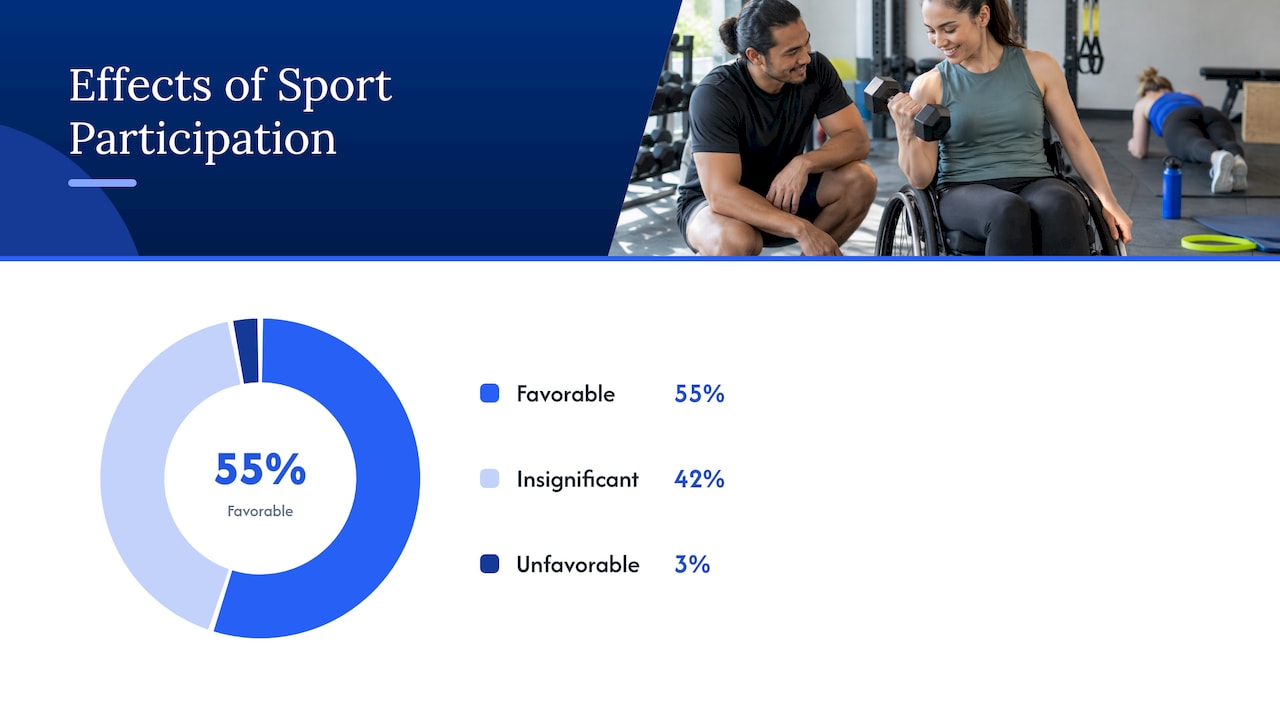
A 2024 scoping review in the Journal of Physical Activity and Health looked at 164 studies. It classified the effects of sport participation for adults with physical or intellectual disability as 55% favorable, 42% insignificant and 3% unfavorable. Notably, 159 of the 164 studies were in disability-specific settings. Inclusive settings are where the evidence base is still being built, and that is where Australian gyms can lead.
If you are exploring gentle formats for strength building, these low impact workouts with adaptive coaching show how intensity and movement choices can be scaled to the person.
The FitSkills trial: gyms work
The most useful Australian evidence for gym owners is FitSkills. Reported by Australian Physio, the trial followed 123 young people with disability aged 13 to 30 through 12 weeks of twice-weekly exercise at their local community gym. Participants included people with cerebral palsy, Down syndrome, autism spectrum disorder and vision impairment, and 20% had complex disability. The authors concluded that gym exercise was safe and feasible.
GYM-SPARC adds that nearly 95% of young adults who started the twice-weekly 12-week FitSkills program completed it, including young adults with complex disability. People stay when the program is supported and the environment works for them.
Barriers that evidence says to fix first
Physical access
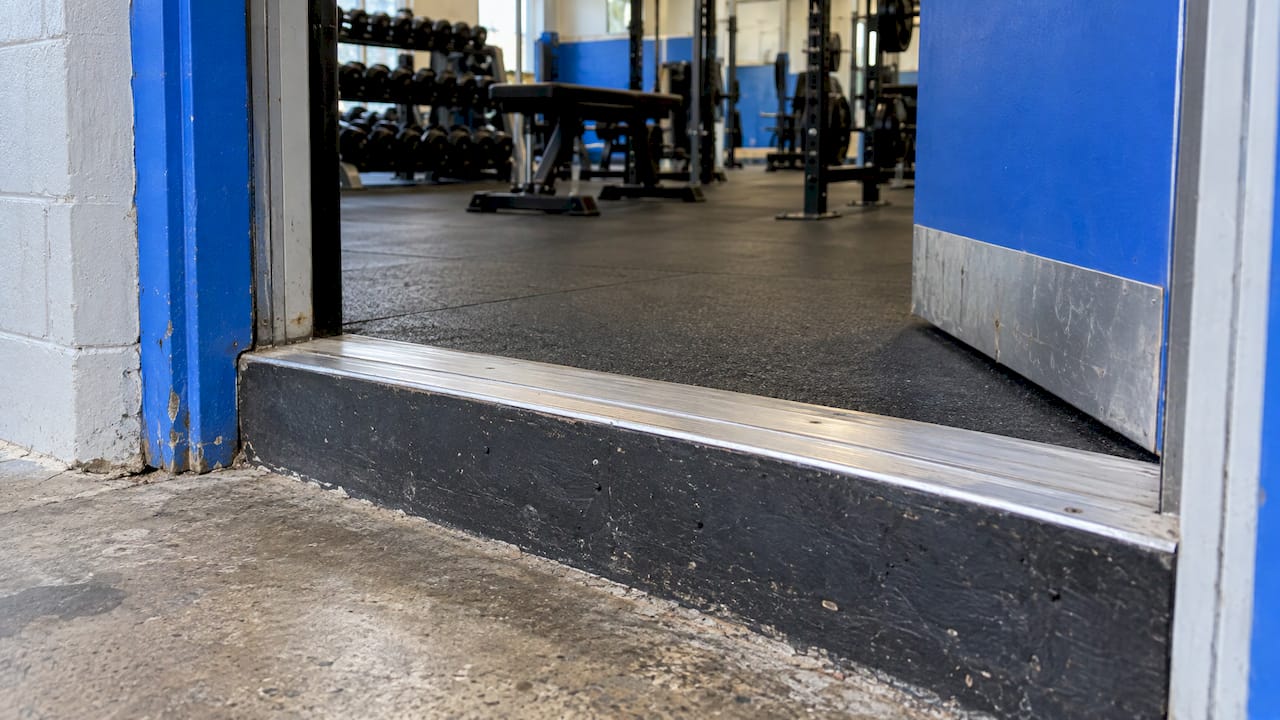
A 2021 scoping review found physical accessibility problems, including non-adjustable equipment, were the main barrier in 18 of 26 papers on adults with physical disabilities. Australian Physio reports that access, change rooms, layout, equipment and transport are frequently cited by young adults with physical disability, and adds that standard gym equipment can be highly adaptable with the right expertise.
ABC News has reported on gyms with steps, doors that are too narrow and staff who do not know how to adjust a program. Change rooms are a recurring pain point, so see our guide to accessible changing rooms.
Sensory and social environment
A Griffith University qualitative study found many gyms are not physically or socially inclusive. The barriers it lists include inaccessible buildings and equipment, overwhelming sensory environments such as loud music and bright lights, and a culture centered on performance and aesthetics.
Sensory load is especially relevant for autistic clients. Exercise formats that adjust the environment, like autism and swimming lessons, show how predictable structure and small groups can make activity easier to join. In a gym, the equivalent changes are quiet hours, adjustable lighting and music, and a clear orientation. Our guides to sensory-friendly gym design and autism-friendly gyms in Australia go through them.
The feeling of not belonging matters too. Kennedy and colleagues’ 2022 scoping review notes that people with disability describe fears of standing out and self-consciousness in gyms. Naming and removing ableist assumptions is part of the fix, and ableism in fitness shows what it looks like on the floor.
Cost and funding
A 2025 mixed methods study by Kennedy, McKenzie and Shields found that under NDIS rules, funding can pay for a support worker to attend the gym but not for the membership itself, because entry is treated as an everyday cost. Young adults in the study wanted flexible entry options and value for money. Flexible pricing, trial passes and pay-as-you-go options respond directly to that finding.
What helps people take part
The same 2022 scoping review (42 articles from 35 studies) identified eight types of social support that facilitate exercise participation in community gyms. The number of studies reporting each is in brackets:
| Support type | Studies | What it looks like in a gym |
|---|---|---|
| Supervision | 30 | A trained staff member or support person present on the floor |
| Peer support | 21 | Training with other members, buddy systems |
| Specialist support | 19 | Input from an allied health professional or experienced trainer |
| Orientation | 15 | A tour and equipment walk-through before the first session |
| Education | 7 | Plain information on exercise and healthy choices |
| Logistical support | 6 | Help with transport, booking and scheduling |
| Motivational support | 5 | Feedback and encouragement |
| Organized social activities | 4 | Group events and shared sessions |
The review explains that this support works through emotional support (a sense of belonging), instrumental support (help with exercises and equipment) and informational support. A gym that builds even three of these into its onboarding has a stronger evidence base behind it than one that relies on goodwill.
How trainers can adapt programs and communication
A 2025 systematic review by Mehringer and colleagues, published in the Journal of Developmental and Physical Disabilities, identified six themes for providing exercise to adults with diverse disabilities:
- Individualize intensity to each person’s needs and abilities.
- Offer modifications or alternative options.
- Involve parent, guardian or caregiver support where relevant.
- Offer special accommodations to enable involvement.
- Work without disability-specific exercise standards, because few exist.
- Use strategies that increase adherence.
In practice, that means starting with a conversation rather than a diagnosis. Ask what the client wants to achieve, what has and has not worked, and what they need from you. Offer two or three ways to do each movement, and let the client choose. Check in on intensity with a method that suits them, and keep notes on what you changed and why.
Condition-specific knowledge helps once the conversation is started. Our practical guides cover cerebral palsy exercise, Ehlers-Danlos exercise and training clients with spinal cord injury. For program structure, see adaptive fitness programs.
What gym owners can change this quarter
AUSactive’s 2026 Welcoming Fitness Environments report recommends an accessibility page, facility photos or videos, disability audits involving people with disabilities, independently navigable environments, visible support requests and member feedback groups. It also recommends a clear organizational strategy with measurable goals and accountability, carried through leadership, staff training, operations and customer experience.
A practical order of work:
- Publish an accessibility page with photos or video of entrances, change rooms and equipment, so people can plan a visit.
- Run an audit with people with disability, not just a checklist. Our disability risk assessment guide for gyms gives an Australian framework.
- Make support requests visible at booking and on the floor.
- Form a member feedback group that includes lived experience, and act on what it says.
- Train every staff member, front desk included, then set goals you can measure.
- Plan the rollout across sites and rosters with a group training rollout for gyms.
GYM-SPARC makes the business case: a few small changes in how you approach and welcome clients with disability can grow your client base and memberships, and build staff knowledge.
The training gap
The Griffith study found most fitness professionals felt unprepared to work with people with disability. They learned through trial and error, mentorship or self-study, and they asked for disability content in foundational training and ongoing professional development. The same study found NDIS funding was seen as limited and confusing, which discouraged some professionals from offering inclusive services.
The Mehringer review makes a related point: access to qualified trainers is most limited in community settings such as gyms, where people with disability are most likely to look for exercise. Structured training that is practical and CPD-accredited closes that gap.
Our perspective
Most of the evidence above points in one direction: people with disability want to exercise, and the gap is in the environment and in staff confidence. We built Inclusive-AF around that gap.
Too much disability training patronizes. It talks about clients as problems to be managed and leaves trainers with sympathy but no skills. We take a different approach. Our modules are designed with people with disability and focus on practical knowledge a trainer can use on the next shift.
We also think context matters. Knowing the social model of disability and Australia’s history of how disabled people have been treated changes how you design a session, greet a client and handle a request. Evidence tells you what works. Understanding is why you apply it with respect.
All of our courses are CPD accredited and validated for industry requirements, so the time your team invests counts toward professional development.
Tommy
Build your team’s skills with Inclusive-AF
If the research above matches what you see on your gym floor, our training is the practical next step. Our Crash Course: Train Clients With Disability is a free introductory course, so you can start without a commitment.
For deeper context, the store offers The Social Model of Disability at A$40 and History of Disability in Australia at A$20, both one-off payments. Running a gym or an institution? Group and team enrolment lets you train your whole staff together.
FAQ
What does inclusivity in fitness refer to?
It refers to making fitness spaces, programs and communication usable and welcoming for people of all abilities. In practice that covers accessible facilities, trained staff, flexible programs and visible support. AUSactive describes it as depending on attitudes, communication and access.
Is it safe for people with disability to exercise in a regular community gym?
The FitSkills trial found that 12 weeks of twice-weekly community gym exercise was safe and feasible for young people with disability, including cerebral palsy, Down syndrome, autism and vision impairment. Programs should still be individualized. Clients with a specific medical condition should check with their doctor or physiotherapist before starting.
Does the NDIS pay for a gym membership?
According to a 2025 Australian study, NDIS funding can cover a support worker attending the gym with a participant, but not the membership fee, as entry is treated as an everyday cost. Rules can change, so check the NDIS website or your plan manager for current guidance.
What should a trainer do first with a new client with disability?
Start by asking about goals, preferences and what support they want. Then offer modifications and alternatives for each exercise, and adjust intensity to the person. These steps reflect the main themes of a 2025 systematic review on exercise for adults with disabilities.
Sources
- AUSactive, Welcoming Fitness Environments report (2026)
- AUSactive, Guidance for Inclusive Business Practice
- GYM-SPARC (VicHealth and La Trobe University)
- British Journal of Sports Medicine, physical recreation systematic review (2024)
- Journal of Physical Activity and Health, sport participation scoping review (2024)
- Australian Physio, community gym exercise for young adults
- Scoping review of barriers and facilitators of exercising in fitness facilities (2021)
- ABC News, exercise and gym accessibility (2024)
- Griffith University, what fitness professionals think about working with people with disability
- Kennedy, McKenzie and Shields, gym entry fees study (2025)
- Kennedy et al., social support initiatives scoping review (2022)
- Mehringer et al., exercise considerations for adults with disabilities (2025)
- Low impact workouts with adaptive coaching
- Autism and swimming lessons